A well-organised pantry is not a display shelf. It is a working part of your kitchen. When it works, you can see what you have, reach it without a hunt, and use it before it goes stale. When it does not, you buy duplicates, lose packets at the back, and throw away food you forgot about. The good news is that most pantry clutter comes from a handful of habits, not from a lack of space or expensive storage. Here are ten common mistakes and the fixes that actually stick.
1. Buying Too Much and Storing It in the Wrong Place
Mistake 1: Over-buying because the deal looks good. A multi-buy on rice or chopped tomatoes is only a saving if you have room to store it and a realistic plan to eat it. Bulk buying without a plan turns shelves into a heap of duplicates. Before you buy, check what you already have. Use the “one in, one out” rule: a new bag of pasta does not go in until the old one is open. If you shop online, keep a running list of what is low, not what is on offer.
Mistake 2: Storing heavy or bulk items where you cannot use them. Large bags of flour, rice and potatoes often end up on a high shelf because they are heavy. Then you avoid them. Keep heavy items at waist height or below, where you can lift them safely. If you decant bulk items, use containers with handles and keep them near the counter where you actually cook. For food safety, always follow the storage instructions on the packaging and check use-by dates.
2. Containers That Fight Your Shelves
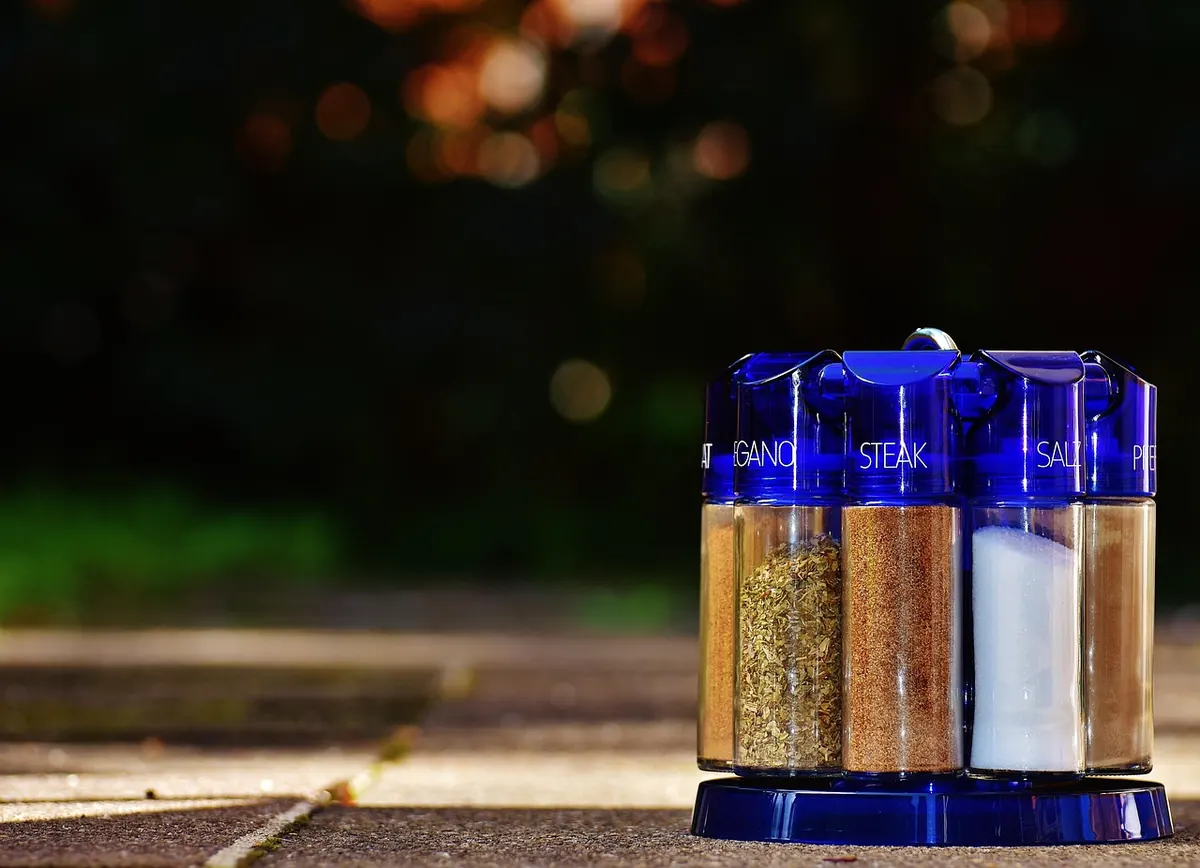
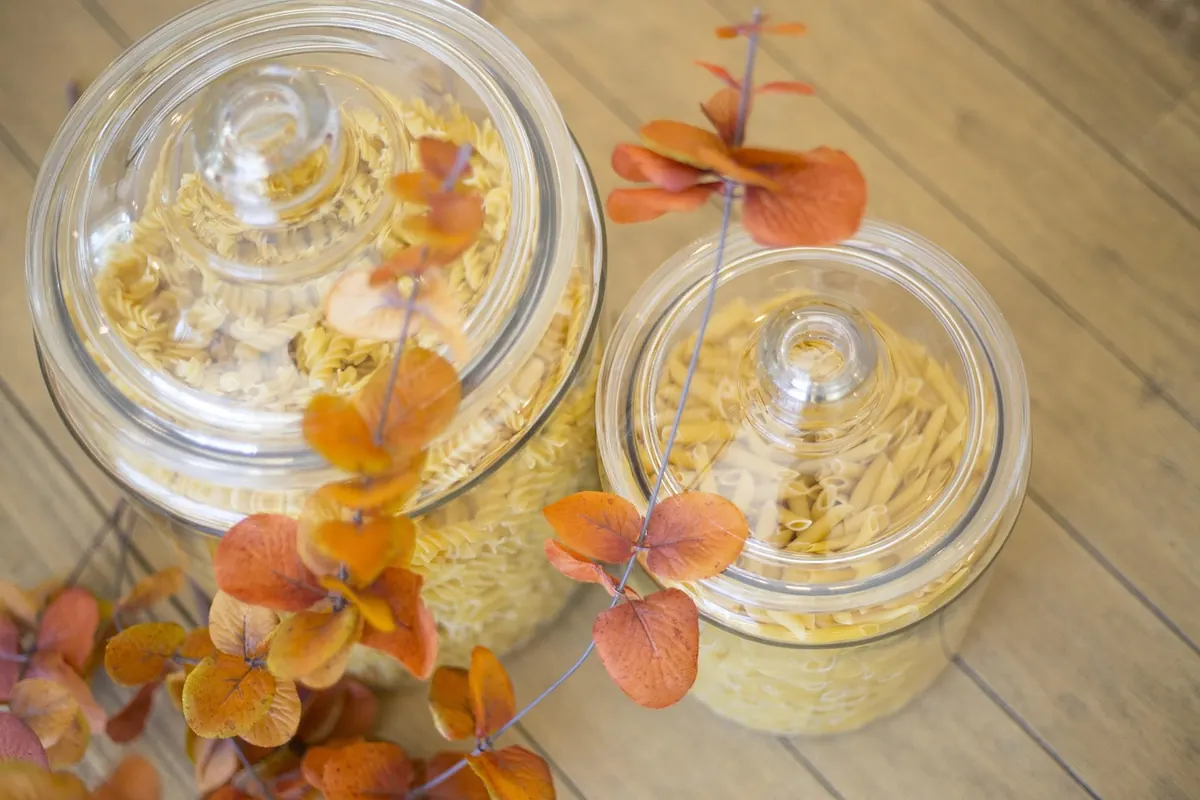
Mistake 3: Mismatched containers. A collection of odd jars, tubs and tins is hard to stack and wastes vertical space. Round containers leave gaps on square shelves; tall bottles hide shorter items behind them. Choose a small number of sizes that stack neatly and fit your shelf depth. Clear or uniform containers make it easier to see what is inside. You do not need to replace everything at once. Start with the items you use most, such as flour, sugar, pasta and rice.
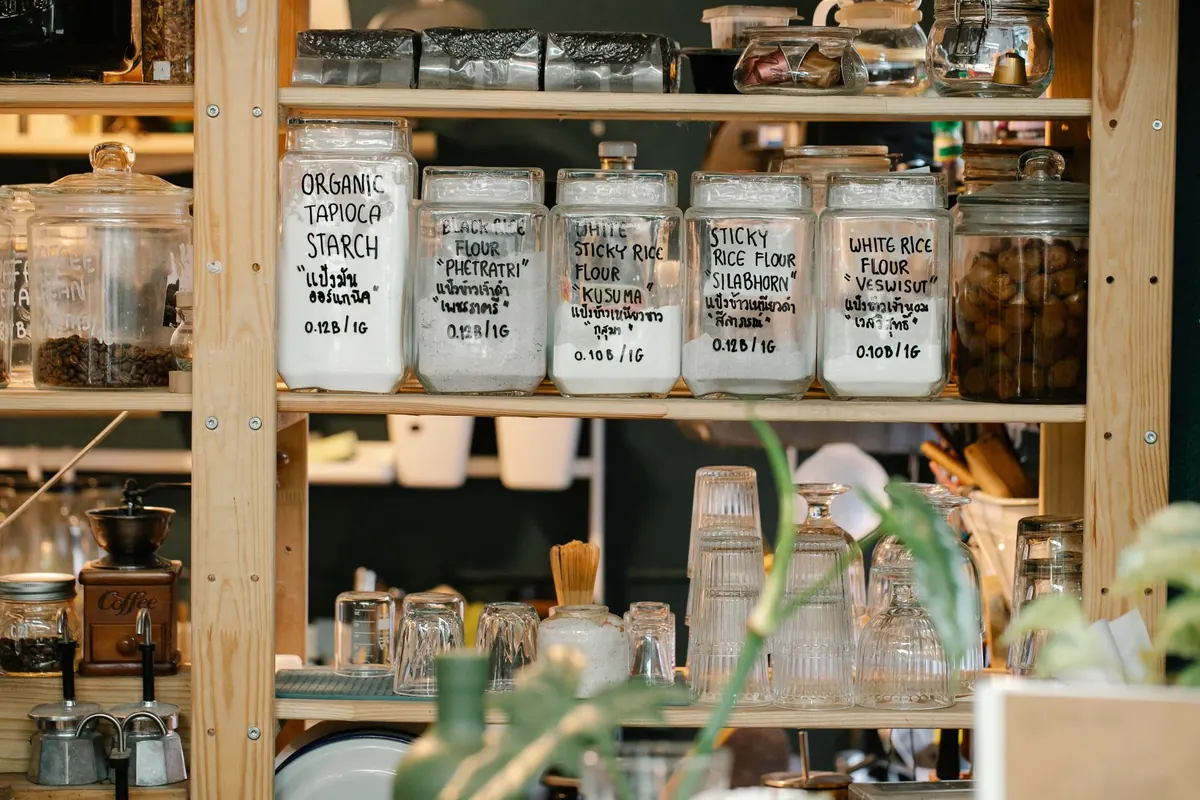
Mistake 4: Decanting everything into identical jars. Pretty jars are useless if you cannot tell the plain flour from the icing sugar. Labels matter more than matching lids. Write the contents and the date on the label, especially for opened packets. Not everything needs decanting. Tins, resealable bags and original packets often keep food fresher and take up less room.
- Measure one shelf before buying containers.
- Choose stackable shapes that match your shelf depth.
- Label contents and the date opened.
- Keep original cooking instructions or cut them out and tape them inside the cupboard door.
3. Deep Shelves and Hidden Food
Mistake 5: Deep shelving with no way to see the back. A deep shelf can hold a lot, but it also becomes a graveyard for food you cannot reach. You buy another jar of honey because the first one is invisible. Fix this with risers, baskets, clear trays or a lazy Susan. Group similar items in one basket so you can pull the whole thing out. If you have a deep cupboard, use the front for daily items and the back for labelled backstock.
Making the back visible
Use clear containers, baskets or risers so you can see what is behind the front row. If you cannot see it, you will not use it. A simple piece of card or a small box can create a step so shorter jars are not hidden by taller ones.
Mistake 6: Stacking items behind each other with no rotation. Without a first-in, first-out system, older packets stay at the back and new ones get used first. When you unpack shopping, move older items to the front. A simple “use me first” box is useful for open packets, short-dated items and leftovers from baking projects. Check it before you plan a meal.
4. No Inventory, No Dates, No Plan
Mistake 7: Ignoring dates until something smells wrong. Dates on packaging are there to guide you, but they only help if you can see them. Store items with the date facing out. Keep a marker pen nearby and write the date you opened a packet. For foods with a use-by date, follow the label and do not taste to test safety. For best-before dates, use your judgement on quality, but do not let items disappear for months.
Mistake 8: Having no idea what you own. Duplicate buying is the fastest way to fill a pantry. A quick inventory does not need an app. Keep a list on the inside of a cupboard door or a note on your phone. Before shopping, take a photo of the shelf. A monthly ten-minute check is enough to catch duplicates and near-dated items. If you find three open bags of the same spice, combine them into one labelled jar and use that first.
5. Organising for Looks Rather Than Cooking
Mistake 9: Making the pantry too pretty to use. A row of matching jars looks calm, but if it means you cannot reach the salt while cooking, it will not last. Organise by how you cook. Keep breakfast items together, baking supplies in one zone, and savoury cooking oils, stocks and tins near the hob. Put everyday items at eye level. Heavy items below, light items above. Leave a little empty space so
Photo: Sarah Chai / Pexels