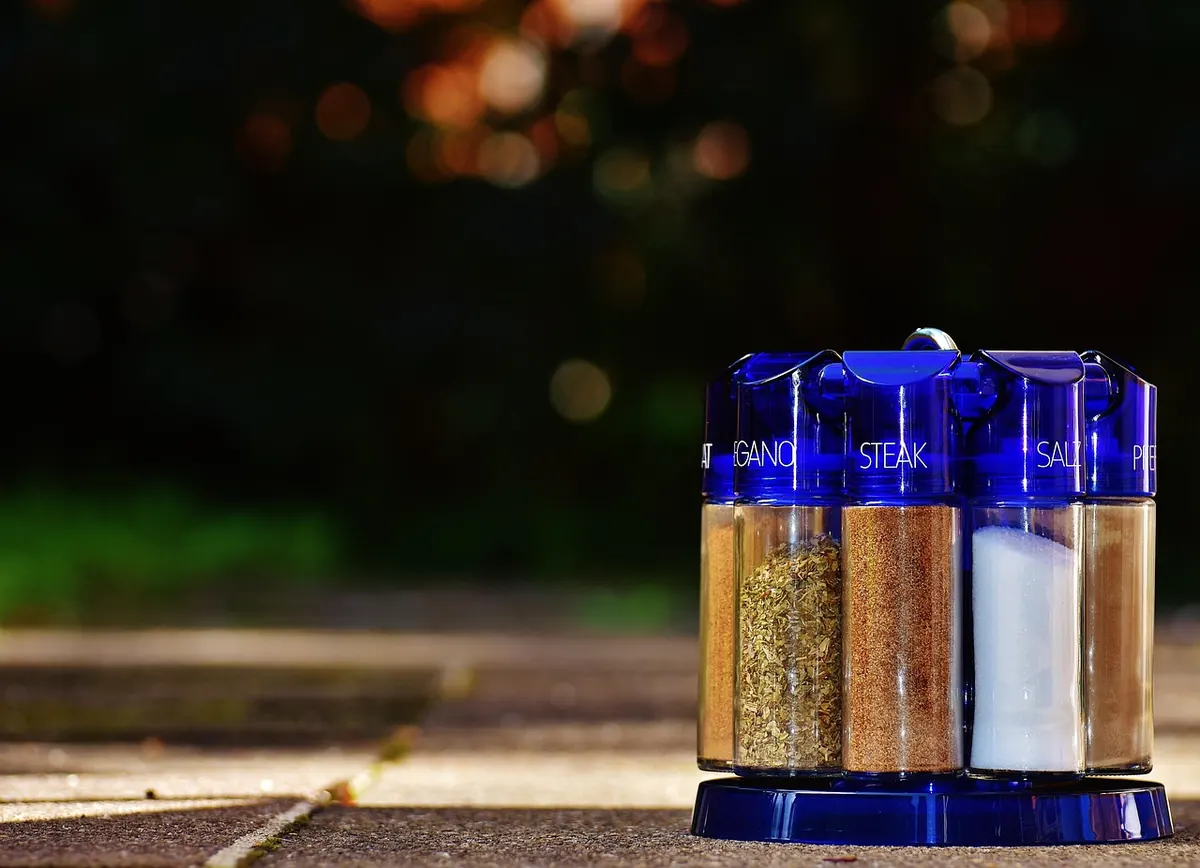
A small kitchen and a serious spice habit are not natural allies. The cupboard above the hob fills up, jars get pushed to the back, and eighteen months later you find a dusty pot with no readable label. The answer isn't more storage. It's a system: the right rack in the right place, jars that suit the way you actually cook, and labels you can read at a glance.
None of it needs to cost much. Most of the improvement comes from deciding where things live, and then sticking to it.
Start With What You Already Own
Empty the spice shelf onto the worktop before you buy anything. Group everything into four piles: whole spices, ground spices, blends, and dried herbs. Then smell each one. If a ground spice smells of dust rather than cumin or coriander, it has nothing left to give and can go. As a rough guide, ground spices are worth keeping for around six months to a year and whole spices for two or three years, though heat and light will shorten that considerably.
You will probably find duplicates: two jars of paprika, three near-empty pots of mixed herbs. Combine them, or bin the older one. This is also the moment to notice what you never touch. If a jar has survived three clear-outs, it isn't part of your cooking and doesn't deserve shelf space.
Where Spice Storage Can Actually Go
In a UK kitchen, vertical space and door space are usually wasted. Both suit spices better than a deep shelf, because you can see what you have.
- Inside a cupboard door. A shallow door rack takes up only a few centimetres of depth and keeps jars facing you. Check the hinges can take the weight before you load it up.
- A tiered shelf riser. Two levels where there was one, so nothing hides behind anything else.
- A turntable in a corner cupboard. The deep corner is otherwise where jars go to be forgotten.
- A shallow drawer with an insert. Jars lie flat with lids up, and you read the whole collection in one look.
- Magnetic tins on the side of the fridge. Ideal for the six or eight spices you reach for daily.
- A narrow wall rack on the side of a tall unit, or the end of a run of cabinets.
Where you put it matters as much as what you buy. Keep spices away from the hob, the oven, the kettle and any sunny windowsill. Steam, heat and light all speed up the decline of the oils that carry flavour. A cool, dark cupboard a metre from the cooking is better than a pretty rack directly above the pan.
Jars: Match the Container to the Job
Spice jars are not neutral. The wrong shape wastes space and the wrong material costs flavour.
Square over round
Square and rectangular jars sit flush against each other with no wasted gaps. In a small cupboard, that difference is worth more than any rack.
Small over large
A 100ml jar holds plenty of a ground spice you use weekly. Buying everything in one big size means half of it sits there fading. Keep a small working jar and store the rest elsewhere.
Glass, tin or plastic
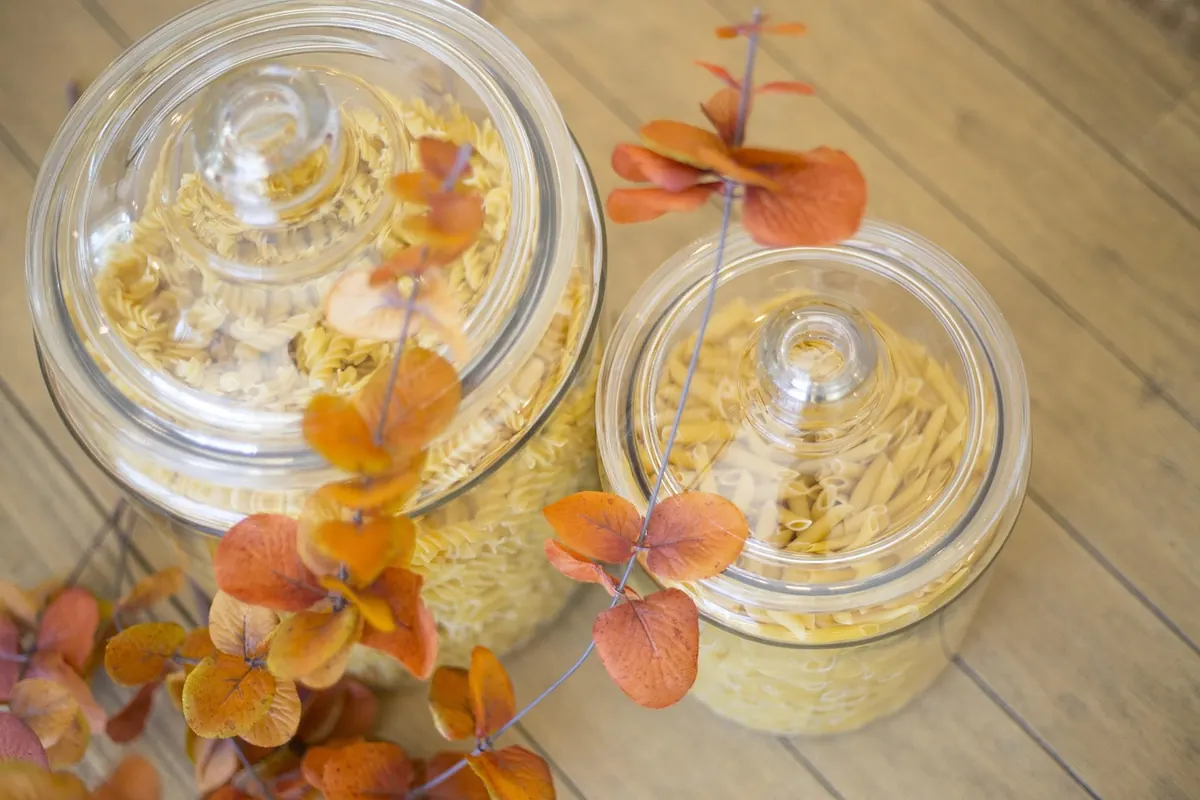
Glass is easy to wipe clean and doesn't hold on to smells, but it lets light through, so it belongs in a cupboard rather than on an open shelf. Tins block light and suit whole spices. Plastic is light and cheap, though it can absorb the aroma of whatever it held before, so avoid reusing containers that once held something strong.
One system, not eleven
Standardise the jar, or at least the lid size. Mismatched jars never stack or fit a rack properly, and you will keep reorganising them forever.
Labels That Earn Their Place
An unlabelled jar of brown powder is a small daily gamble. Good labelling is quick and unglamorous.
- Write the spice name, not a shorthand that only makes sense when you aren't rushing.
- Add the date you opened or refilled it, so you know when to check it.
- Put a label on the lid as well as the side if jars lie flat in a drawer.
- Use a fine permanent pen, or a label maker if your handwriting drifts.
- Group by colour or symbol if you cook across several cuisines: one colour for Indian, another for baking.
Label after filling, never before. Wipe the jar first, or the label lifts within a week.
Protecting Flavour, Not Just Space
The best storage protects what is inside. Three habits do most of the work:
- Buy whole where you can. Cumin, coriander, fennel, black pepper and cardamom hold their flavour far longer as seeds and pods. Grind what you need.
- Never shake over a steaming pan. Steam enters the jar, clumps the spice and dulls it. Tip some into your hand or a small dish first.
- Keep the seal clean. A rim caked with old spice won't close properly, and air does the rest.
If you buy in bulk, a freezer works well for long storage, but let the container come to room temperature before opening it so condensation doesn't form inside.
The Working Set and the Backstock
Split your spices in two. The working set is eight to twelve jars you use most, in small containers, within arm's reach of the hob. The backstock is everything else in a labelled box in a cool cupboard, plus any larger bags of refills. Top up the working jars once a month rather than digging through the whole collection every time you cook. Refill shops and bulk buys make this cheaper, and small jars mean nothing sits around long enough to go flat.
A Ten-Minute Spice Reset
If the cupboard has got away from you, do this once and the rest is maintenance.
- Empty everything onto the worktop.
- Smell each jar; bin anything that smells of nothing.
- Merge duplicates and wipe the shelf.
- Choose your working set and put it in the handiest spot.
- Move the rest to backstock, labelled with dates.
- Settle on one jar style and replace the strays as they empty.
Ten minutes, one shelf, and cooking gets faster. You will stop buying a third jar of ground ginger, and you will actually taste the spices you own.
Photo: Alexas_Fotos / Pixabay