Few things cause more quiet guilt in a kitchen than a fridge shelf full of food you meant to eat. Often the culprit isn't poor organisation but a misunderstanding of the two small lines of print on the packaging: use-by and best-before. They are not interchangeable, and treating them as though they are leads to two opposite mistakes — binning food that was perfectly good, or keeping food that genuinely needed to go. Clearing up the difference is one of the fastest wins in pantry management.
What "use-by" actually means
Use-by dates are about safety. They appear on food that spoils quickly and could make you ill: fresh meat and fish, ready-to-eat salads, soft cheeses, chilled ready meals, smoked fish and unpasteurised dairy.
With these, the date is a line, not a suggestion. Food should not be eaten after its use-by date, even if it looks and smells completely normal — the bacteria that cause food poisoning frequently give no warning at all. Cooking it to "rescue" it isn't a fix either. Heat kills many bacteria but not the toxins they have already produced.
One caveat worth taking seriously: if you are pregnant, older, or living with a condition that affects your immune system, be stricter rather than looser, and take advice from a health professional if you are unsure.
What "best-before" actually means
Best-before is about quality, not safety. You will find it on dried pasta and rice, tins, flour, cereals, biscuits, chocolate, frozen food and eggs. After the date, the food may lose flavour, texture or colour, but it is generally still safe if it has been stored properly and shows no signs of spoilage.
Tinned tomatoes make the point neatly. A tin a year past its best-before will still make a perfectly decent sauce; what has changed is the depth of flavour and the thickness, not the safety.
Eggs work on the same principle. British eggs carry a best-before date rather than a use-by date, and kept in the fridge they can still be used after it, provided they are cooked thoroughly. For anything raw or lightly cooked, treat the date as final.
The everyday test is your senses: look, smell, touch. Mould, sour or off smells, slime, fizzing, or a bulging tin are all reasons to bin something, whatever the label says.
"Display until" and "sell by" are not aimed at you
Some packaging carries a display until or sell by date. These are stock rotation aids for shops and their staff, not instructions for your kitchen. Ignore them and work from the use-by or best-before date instead.
Storage decides how much of that date you actually get
Dates on packaging assume the food has been kept in the conditions the manufacturer intended, usually unopened. Once it is in your kitchen, storage is what stretches or shortens it.
In the fridge
- Keep it at 5°C or below — a fridge thermometer is a small purchase that pays for itself.
- Store raw meat and fish on the bottom shelf in sealed containers, so nothing drips onto food below.
- Keep eggs in their box on a middle shelf rather than in the door, where the temperature swings.
- Don't overfill. Air needs to circulate for the fridge to do its job.
- Move anything you won't use in time to the freezer on the day you buy it.
In the cupboard
- Choose a cool, dark, dry spot away from the oven, hob and kettle.
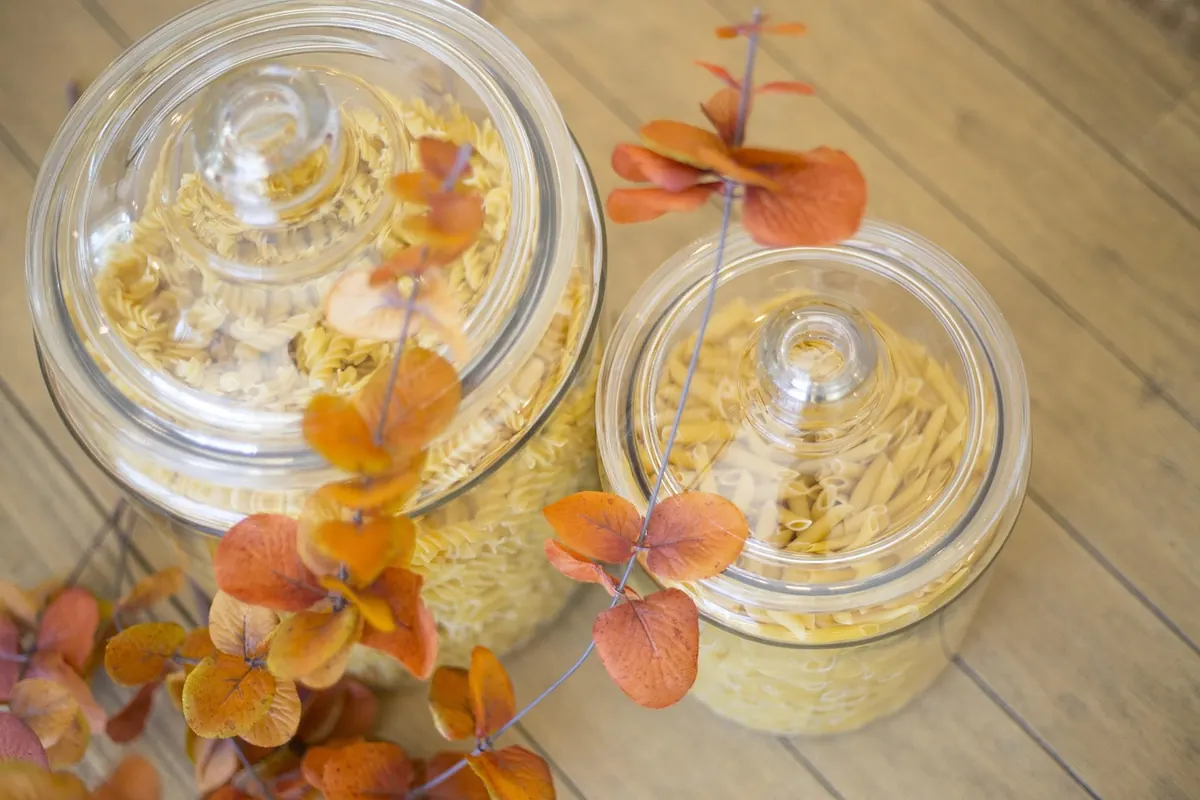
- Decant opened packets into airtight containers and write the date on the container — a strip of masking tape and a marker is enough.
- Keep flour, rice, pasta and cereals bone dry; moisture is what turns them.
- Store oils away from the light, and use the oldest bottle first.
When to ignore a date, and when never to
- Dry and tinned goods past their best-before: inspect them, then use them. Pasta, rice, tins and spices rarely become unsafe on a fixed day.
- Chilled food past its use-by: bin it. No sniff test overrides this one.
- "Once opened" instructions: treat these as a fresh date. A jar of sauce opened on Monday may need using within a few days, whatever the original label said.
- Bulging, badly dented or rusted tins: bin them, regardless of the date.
- Anything mouldy: for soft foods, jams and sauces, throw it out — scraping the surface doesn't remove what has spread underneath.
Freezing: the date rule most households get wrong
Freezing pauses the clock; it doesn't reset it. You can freeze food up to its use-by date, but not after it. A pack of mince with two days left is fine to freeze today, and not fine to freeze in three days' time.
Label everything with the contents and the date you froze it, then defrost in the fridge overnight and use within 24 hours. Once defrosted, don't refreeze raw meat and fish. Frozen food with a best-before date can often be kept far longer than the packet suggests, but quality falls away — a few months is a sensible target for most home-frozen food.
A five-minute routine that keeps dates under control
Pick one day a week and give the fridge ten minutes. Move anything close to its use-by date into a visible "eat first" box at eye level, then build one meal a week around whatever is in it — a soup, a frittata, a traybake, a pasta sauce. In the cupboard, keep opened packets labelled and store new purchases behind old ones so you use the oldest first.
Before buying in bulk, ask whether you will genuinely get through it. A large bag of flour is only a bargain if it gets used rather than binned. A weekly note on the fridge door listing what needs eating next does more for your food bill than any app.
When a date and your own judgement disagree, remember the order of operations: use-by means safety, best-before means quality, and your senses are the final check. If something looks, smells or feels wrong, it doesn't matter what the label says.