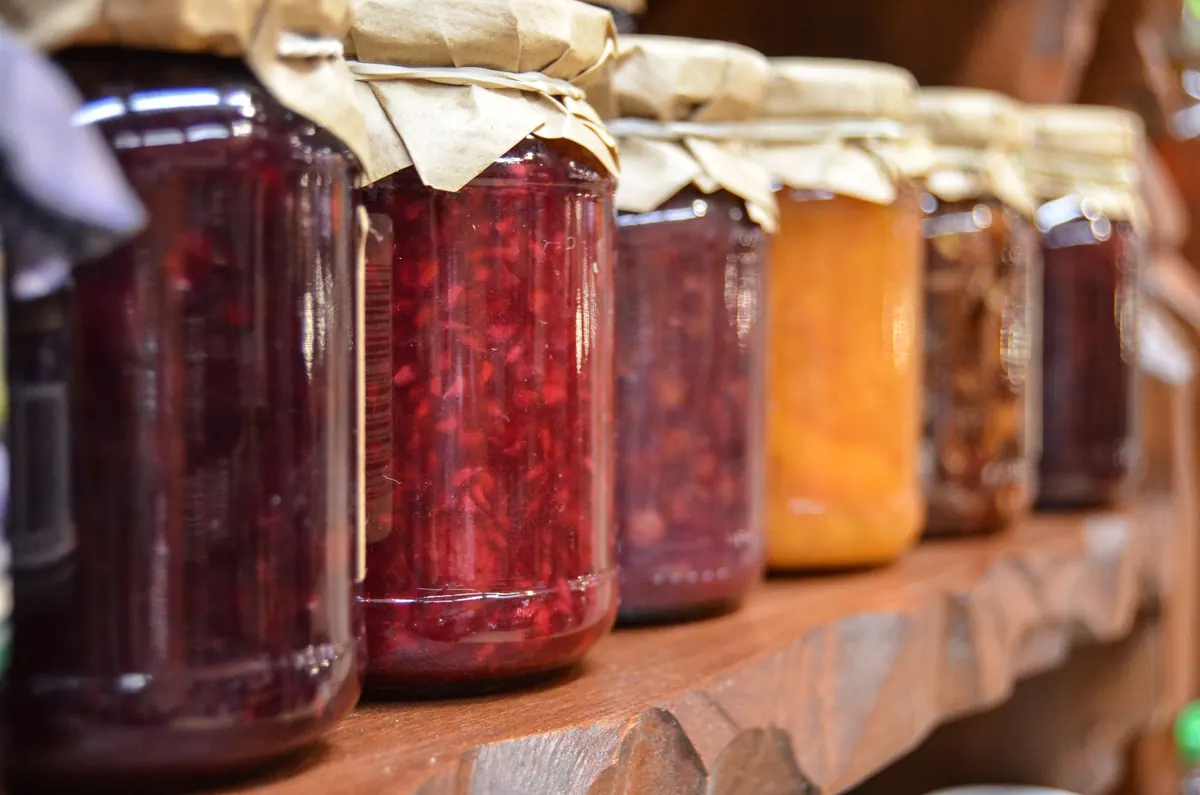
There is a particular satisfaction in opening a cupboard in January and finding the chutney you made from a glut of green tomatoes back in September. Preserving is not difficult, but it is unforgiving of shortcuts. The difference between a jar that keeps for a year and one that grows a fur coat of mould comes down to three things: how clean the jar was, how acidic the contents are, and how you store the finished pot. Get those right and the rest is mostly chopping and stirring.
Choose the right jars before you think about sterilising
Any glass jar with a sound metal twist lid will do, provided it is free from chips, cracks and rust. Supermarket jars are perfectly good for chutney and jam, but check the lid carefully: a dented or corroded lid will not seal. Lids can be reused if the rubbery lining is intact, though for anything you intend to keep beyond a few months, buy new ones. Clip-top jars with rubber gaskets look handsome on a shelf, but the gaskets perish and need replacing regularly.
Two other bits of kit matter more than beginners expect. First, a wide-mouthed jug or jam funnel, which keeps sticky preserve off the rim of the jar. Second, the right pan: stainless steel or enamelled, never bare aluminium or uncoated cast iron, because vinegar reacts with metal and gives the preserve a metallic tang. Wooden spoons or silicone spatulas, not metal, for the same reason.
Three reliable ways to sterilise jars
Bacteria, yeasts and moulds are everywhere, including on apparently clean glass. Sterilising knocks them back so your preserve has a fighting chance. Pick whichever method suits your kitchen:
- Dishwasher. Run jars and lids through a hot cycle, ideally without a tablet, and leave them in the machine with the door closed until you are ready. They need to be filled while still warm.
- Oven. Wash jars in hot soapy water, rinse, stand them upright on a baking tray and heat at about 140°C (Gas Mark 1) for 15 minutes. Follow the jar manufacturer's advice where it differs. Turn the oven off and leave the jars inside until filling time. Dry heat can stress glass, so never pour cold liquid into a hot jar or hot preserve into a cold one.
- Boiling water. Lower clean jars into a deep pan of water, bring to the boil and simmer for ten minutes. Lift them out with tongs, drain upside down on a clean tea towel, then turn upright. For lids, pour boiling water over them and leave for a minute or two; don't boil lids with rubber seals for long, as the seal degrades.
Sterilising tablets and solutions work too, but the jar must be drained and left to dry fully, or rinsed with cooled boiled water. Whichever method you use, handle jars by the outside only once they are sterile.
Acidity is the line that decides everything
This is the bit most beginners skip. The accepted safety threshold for boiling-water preserving is a pH of 4.6: below it, the bacteria that cause botulism cannot grow; above it, they can. Jams, marmalades, vinegared chutneys and pickles are all high-acid and can be safely sealed hot or processed in a pan of boiling water. Low-acid foods — plain vegetables in brine, meat, fish, most stocks — need pressure canning, equipment few UK kitchens have. Don't improvise with those.
In practice, that means: don't water down the vinegar in a chutney recipe, don't swap vinegar for lemon juice unless the recipe says so, and don't drastically cut the sugar in a jam, because sugar helps preserve it as well as set it. Most pickling vinegars sold in the UK are around 5% acetic acid; check the label, because a milder vinegar needs adjusting. Tomatoes vary in acidity, which is why many chutney and sauce recipes include a splash of lemon juice or extra vinegar. If in doubt, cook a tested recipe as written rather than adapting it, and if you are preserving for anyone pregnant or with a weakened immune system, take extra care and seek professional advice if unsure.
Getting the set, the fill and the seal right
Jam sets at roughly 104–105°C, so a sugar thermometer takes the guesswork out. Without one, chill a saucer, drop a little jam onto it, let it cool and push it with a finger: if it wrinkles, it's ready. Chutney needs no thermometer — cook it down until a wooden spoon drawn through leaves a clear channel, and remember it thickens further as it cools. Pickles want their vegetables fully submerged in vinegar or brine, held down with a weight or a folded cabbage leaf.
Fill hot jars while the preserve is hot, leaving about a centimetre of headspace for chutney and pickles and a little less for jam. Wipe the rim with a clean damp cloth, seal immediately and don't touch the inside of the lid. Traditional jam is often finished with a wax disc on the hot surface and a cellophane cover held by a rubber band; if you're using a metal lid, skip the wax disc. As the contents cool, a metal lid should pull down and stay concave.
Storing, checking and knowing when to bin a jar
Keep preserves in a cool, dark, dry cupboard away from the oven and radiator. Leave them undisturbed for a day or two, then test each seal by pressing the centre of the lid: if it clicks up and down, the jar hasn't sealed. Put that one in the fridge and eat it soon. Chutney is best left for four to six weeks to mellow before you open it; jam is ready as soon as it's cold.
Once opened, keep jars in the fridge and use within a few weeks. Discard anything with:
- Mould on the surface, however small the patch
- A fizzy, yeasty or alcoholic smell, or visible bubbling
- A bulging or leaking lid
- Cloudy brine, slime or an off, sour smell
Never taste a suspect jar to check whether it's fine. Mould can produce compounds that spread well beyond what you can see.
Your first preserving season
Start with one recipe and one batch, not six. A simple vinegared chutney is the most forgiving place to begin, because the vinegar does much of the work and a modest mistake rarely ruins the whole pan. Label every jar with the contents and the date, and keep a note of what you'd change next time — more chilli, less sugar, a longer simmer. Buy or beg jars early in the season, wash them as you empty them, and by this time next year you'll have a cupboard worth showing off.
Photo: Pixabay / Pexels